
Chinese Word 爱 (ài): Meaning, Pronunciation, Sentences & Cultural Use | HSK 1
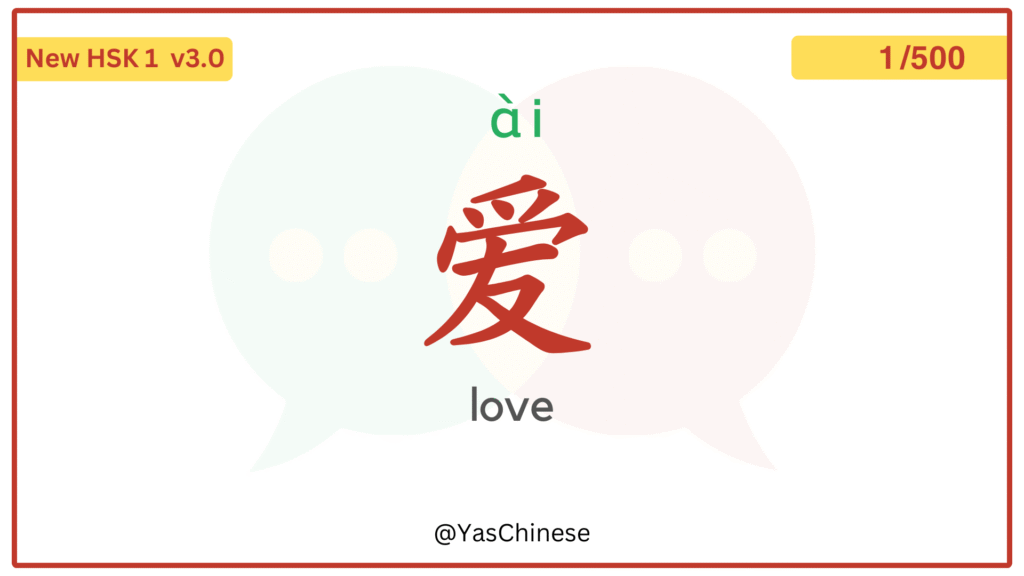
The Chinese word 爱 (ài) is one of the first emotional words most Mandarin learners fall in love with quite literally. It means love, but if you use it the same way you do in English, you might sound a little… too serious.
In Chinese, 爱 (ài) carries weight. It’s deep, emotional, and often tied to responsibility. That’s why understanding how native speakers actually use the Chinese word 爱 (ài) is just as important as memorizing its meaning.
In this beginner-friendly HSK 1 guide, we’ll walk through pronunciation, meaning, structure, example sentences, cultural insights, and real-life usage with pinyin included for every Chinese word and sentence, so learning feels smooth and stress-free.
Chinese Word 爱 (ài): Basic Information
Here’s a quick snapshot of the Chinese word 爱 (ài) for easy reference:
Chinese Word 爱 (ài): Pronunciation Made Simple
The Chinese word 爱 (ài) uses the fourth tone, also called the falling tone.
🔊 Think of it like giving a firm answer:
ài
Say it clearly and confidently don’t stretch it out. Tone accuracy matters a lot in Mandarin, and mastering this early will help you sound more natural.
Chinese Word 爱 (ài): Meaning Explained for Beginners
At its core, the Chinese word 爱 (ài) means deep love.
It’s commonly used for:
-
Romantic love
-
Family love
-
Strong emotional attachment
-
Love for values, culture, or country
For example:
-
我爱你 (wǒ ài nǐ) → I love you
-
我爱我的家人 (wǒ ài wǒ de jiārén) → I love my family
But here’s the key thing beginners often miss 👇
Chinese speakers do not use 爱 (ài) casually.
For everyday likes or hobbies, people usually say:
-
喜欢 (xǐhuan) – to like
Example:
-
我喜欢咖啡 (wǒ xǐhuan kāfēi) – I like coffee
-
我爱你 (wǒ ài nǐ) – I love you (much stronger)
Chinese Word 爱 (ài): HSK Level & Why It Matters
The Chinese word 爱 (ài) belongs to HSK Level 1, which means:
-
You’ll see it early in textbooks
-
It appears in basic exams
-
It’s essential for emotional expression
Learning 爱 (ài) correctly at this stage builds a strong foundation for more advanced vocabulary later.
Chinese Word 爱 (ài): Radical, Strokes & Structure
-
Radical: 爫 (zhǎo)
-
Total strokes: 10
The radical 爫 (zhǎo) is often linked to actions and emotions, reminding us that in Chinese culture, love is something you show, not just say.
Traditional Chinese Form of 爱 (ài)
The traditional character 愛 (ài) includes 心 (xīn), meaning heart. This reflects a deep cultural belief: true love comes from the heart and is proven through care and responsibility.
Chinese Word 爱 (ài): Common Sentences You’ll Hear
Here are natural, beginner-friendly examples you’ll encounter in real life:
-
我爱你 (wǒ ài nǐ)
→ I love you -
我爱我的家人 (wǒ ài wǒ de jiārén)
→ I love my family -
她爱学习汉语 (tā ài xuéxí Hànyǔ)
→ She loves studying Chinese -
我爱中国文化 (wǒ ài Zhōngguó wénhuà)
→ I love Chinese culture
Cultural Meaning of the Chinese Word 爱 (ài)
This is where things get interesting.
In Chinese culture:
-
爱 (ài) is serious and meaningful
-
Parents may rarely say 我爱你 (wǒ ài nǐ)
-
Love is shown through actions cooking, caring, supporting
In romantic relationships, people often start with:
-
我喜欢你 (wǒ xǐhuan nǐ) – I like you
Only later do they say:
-
我爱你 (wǒ ài nǐ) – I love you
When someone says 爱 (ài), it usually implies long-term commitment.
Real-Life Usage of Chinese Word 爱 (ài)
You’ll often see 爱 (ài) in:
-
Valentine’s messages: 爱你一生 (ài nǐ yì shēng) – love you for a lifetime
-
Song lyrics and poetry
-
Family conversations
-
Passion statements: 我爱旅行 (wǒ ài lǚxíng) – I love traveling
Beginner Learning Tip (Very Important)
✔ Use 爱 (ài) for deep emotional love
✔ Use 喜欢 (xǐhuan) for casual likes
This single habit will instantly make your Mandarin sound more natural.